Before dawn, the sound of a conch shell (horagai) rings out across the mountain. People clad in white robes, a small black tokin perched on the forehead, file in a line deep into the peaks. These are the yamabushi. The path they walk is called Shugendō. They enter the mountains, stand beneath waterfalls, lean out over sheer cliffs, and pray before the fire. What, in the end, is this severe shape of practice for? The answer is one: to become buddha in this very body (sokushin jōbutsu), approaching that state through practice in the mountains, apart from daily life. We trace what Shugendō is, beginning from where it actually happens.
What Is Gen?
What, Then, Is "Gen"?
Here we turn to the "gen" of shugen itself. Some difficult terms will come up, but the core of it is a single thing.
Gen is the practice surely bearing fruit. In the vocabulary of esoteric Buddhism, it is siddhi (shitsuji; the Sanskrit siddhi, that is, accomplishment). It is that very efficacy we mean when we say something is reigen aratakana, "of manifest miraculous power." What matters is this: it is not an inborn supernatural power, but an accomplishment that arises from practice carried out nyohō, according to the correct rite.
In Sanskrit, the practice that brings accomplishment is called sādhana, and the accomplishment that the practice bears is called siddhi. Practice and accomplishment are, from the first, an inseparable pair. The "shu" (to cultivate) and the "gen" (the fruit) of shugen, though different in etymology, closely resemble just this relation of practice and its fruit. Gen does not lie somewhere apart from practice. The Mahāvairocana Sutra teaches how mantra practice brings forth siddhi, likening it to something as sure as a face reflected in a mirror.
Kōbō Daishi (Kūkai) sets out this siddhi in two tiers. One is the efficacy the practitioner manifests in this world (the siddhi of mantra-holding, jimyō shitsuji): the working that heals illness and wards off calamity. The other is becoming a buddha in this very body (the siddhi of the Dharma Buddha, hōbutsu shitsuji). And the ultimate of gen is this sokushin jōbutsu, Buddhahood in this very body. When the practice of the Three Mysteries (sanmitsu), forming the mudrā with the hands, chanting the mantra with the mouth, and laying the mind upon the Buddha, resonates with the Buddha's working, gen is born, so the teaching runs.
The Two Tiers of Siddhi (Gen) That Kūkai Set Forth
Hōbutsu shitsuji
Becoming a buddha in this very body. Sokushin jōbutsu, the deepest layer of gen.
Jimyō shitsuji
The efficacy made manifest in this world. The working that heals illness and wards off calamity.
The efficacy a Shugendō practitioner seeks in prayer corresponds to the siddhi of mantra-holding (jimyō shitsuji); the practitioner's becoming a buddha in this very body corresponds to the siddhi of the Dharma Buddha (hōbutsu shitsuji). Worldly gen is precious, but at its ultimate stands becoming a buddha in this very body (sokushin jōbutsu).
Mantra Brings Forth Siddhi as a Face Appears in a Mirror
Translation
And further, Lord of Mysteries, understand by the simile of the reflection that mantra can bring forth siddhi. Just as the image of a face appears when the face turns toward a mirror, so too should you know that the siddhi of mantra appears in just this way.
Original text
復次祕密主!以影喩解了真言能發悉地、如面緣於鏡而現面像、彼真言悉地當如是知。
Source
Trans. Śubhakarasiṃha and Yixing, Da Piluzhena chengfo shenbian jiachi jing (Mahāvairocana Sutra), "Entering the Mantra Gate: Stages of Mind" chapter (Taishō T18n0848).
The Figure Revered as Founder
En no Gyōja, the Man
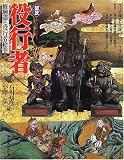
Shugendō reveres En no Gyōja (also En no Ozunu) as its founder. Toward the end of the seventh century, he secluded himself on Mount Katsuragi in Yamato, a practitioner known for the power of his spells.
The En no Gyōja handed down to us is scarcely a human figure. He is said to have commanded demon-spirits at will, to have kept two demons, Zenki and Goki, at his service, and even to have bound Hitokotonushi, the deity of Katsuragi, with a spell. These are the tales told in the Nihon ryōiki, a collection of setsuwa stories from the early Heian period, and in the temple legends of later ages. In 1799 (Kansei 11), well into the Edo period, Emperor Kōkaku even bestowed on him the title "Jinben Daibosatsu" (Great Bodhisattva of Wondrous Working). Over the course of more than a thousand years, the figure of En no Gyōja has been drawn ever larger, little by little.
And yet what survives as solid historical fact is a single record: one short passage in the official history Shoku Nihongi, under the third year of Emperor Monmu (699). What it records is this. Ozunu, a man known for the power of his spells, was exiled to the island of Izu on a slanderous charge, an accusation that twisted the truth to bring him down.
A Record of Exile, and the Line Drawn Between Fact and Hearsay
Translation
En no Kimi Ozunu is exiled to the island of Izu. At first Ozunu lived on Mount Katsuragi and was known by name for his thaumaturgy. Karakuni no Muraji Hirotari, Junior Fifth Rank Lower (outer), took him as his teacher, but later, envying his powers, slandered him as one who deluded the people. For this he was banished to a distant place. It is told in the world that Ozunu could command demon-spirits, making them draw water and gather firewood; and that if they did not obey his orders, he bound them with spells.
The first half, up to the banishment, is the official history's own record; the latter half, from "It is told in the world," is the part the official history itself marks as hearsay. The chronicle distinguishes, within the text itself, between fact and what is merely passed down. The superhuman legends surrounding En no Gyōja swelled into later ages from this one sentence as their starting point.
Source
Shoku Nihongi, scroll 1, entry for the fifth month of the third year of Emperor Monmu (699).
The Peak Entry
Dying to the Mountain, Born Anew
The peak entry is this: to die once, and be born anew.
The central practice of Shugendō is the peak entry (mineiri, entering the peaks; nyūbu shugyō), pressing deep into the sacred mountains. It is also called sanrin tosō, austerity in the mountain forests.
Tosō means to shake off the dust of the defilements. It corresponds, originally, to zuda (Sanskrit dhūta), the Buddhist discipline of casting off attachment to clothing, food, and shelter. The very act of pressing into the mountains and walking on with sleep and food cut to the minimum becomes, in itself, a practice of shaking the dust from the mind.
At the core of the peak entry lies the idea of ritual death and rebirth (gishi saisei). One lets the everyday self die for a time, is held and purified within the mountain as a womb, and is born anew. On the Dewa Sanzan, the three mountains of Dewa, a funeral is held before the entry that treats the practitioner as one already dead, and the mountains are walked as a "journey of rebirth" that circles Mount Haguro, Mount Gassan, and Mount Yudono. The tainai-kuguri, passing through a rock cave shaped like a womb, likewise derives from this death and rebirth.
In the mountains, the ten realms (jikkai), the ten states of existence from the hells up to buddhahood, are cultivated within one's own body, each likened to a particular practice. This is called the practice of the ten realms (jikkai shugyō). The best known is the "Western Peering" (Nishi no nozoki) on Mount Ōmine: held by a lifeline, the practitioner flings the upper body out over a sheer cliff and chants "Sange, sange; rokkon shōjō" (Repentance, repentance; may the six senses be purified), a practice of casting away the body. The Ōmine Okugake-michi, crossing the ridges from Yoshino to Kumano, is registered as a World Heritage Site and is a route of the peak entry.
It was on that same Ōmine that En no Gyōja is said to have realized Zaō Gongen. With no origin in India, this is a divinity born in Japan (a gongen, a provisional manifestation). In a wrathful aspect, one leg raised high, flames at his back, he displays the power to crush delusion. He is the deity who stands as the very emblem of Shugendō.
The Dewa Sanzan "Journey of Rebirth"
Mount HaguroThe present world
This world, where we live now. The journey begins here.
Mount GassanThe past world (after death)
The practitioner becomes, for a time, one of the dead, and is held within the mountain as a womb.
Mount YudonoThe future world (rebirth)
Purified and born anew, the practitioner descends the mountain.
At the core of the peak entry lies ritual death and rebirth (gishi saisei): to die once and be born anew. On the Dewa Sanzan, a funeral that treats the practitioner as one already dead is held before the entry, and by circling the three mountains one is born anew. Walking the mountains is itself a practice that traces death and rebirth.
The Garb of the Yamabushi
Robes and Ritual Implements
The yamabushi's white robes and the implements they carry are each said to bear an esoteric Buddhist symbolism. To put them on is, in itself, to take the teaching upon one's own body.
The tokin worn on the forehead is said to represent the jeweled crown of Mahāvairocana. The oi carried on the back is likened to the mother's womb that holds the practitioner within the peaks; the kongōzue staff in the hand is the very Dharma body of Mahāvairocana, and to hold the staff is to contemplate, "I am none other than Mahāvairocana." The iratoka rosary at the waist is likened to the sword of wisdom that shatters the defilements; the yuigesa draped from the shoulders is a sign that the ten realms are possessed within one's body. And the sound of the conch is likened to the preaching of Śākyamuni Buddha.
What the yamabushi wears in the mountains is not ornament. With every step taken, every note blown, these are implements by which the teaching is confirmed through the body itself.
The Yamabushi's Ritual Implements and Their Symbolism
TokinThe jeweled crown of Mahāvairocana. A small black crown set upon the forehead.
YuigesaA sign that the ten realms are possessed within one's body.
Iratoka rosaryThe sword of wisdom that shatters the defilements.
Horagai (conch)The preaching of Śākyamuni Buddha. Sounded across the mountains, it orders the practice.
Kongōzue staffThe Dharma body of Mahāvairocana. To hold it is to contemplate, "I am none other than Mahāvairocana."
OiThe mother's womb that holds the practitioner within the peaks. A box borne upon the back.
The yamabushi's robes and implements are each said to bear an esoteric Buddhist symbolism. To put them on is, in itself, to take the teaching upon one's own body. The reading of these symbols differs in detail between the Honzan-ha and the Tōzan-ha and from one age to another.
The Practice of Fire
The Saitō Goma and the Fire of Acala
Many, hearing of Shugendō, will picture flames leaping high in the open air. This is the saitō goma.
It is a great homa performed by building an altar outdoors and stacking brushwood and faggots, praying for peace under heaven and an abundant harvest. In the Shingon line, it is said to have been first performed by Shōbō (Rigen Daishi), founder of Daigoji. Its principal deity is Acala (Fudō Myōō). One does not "burn" the homa but "performs" it, and one speaks not of lighting an ordinary fire but of "kindling" the fire of wisdom. For this is no fire of the non-Buddhist paths, but the wisdom-fire (chika) that burns away the defilements.
The wisdom-fire of Acala burns away the fundamental delusion (mumyō, primal ignorance) of all beings. The practice of becoming one with this fire is called kashō zanmai, the samādhi of arising fire. The scriptures teach that for the practitioner to contemplate himself as Acala and abide within the wheel of fire is what is named kashō zanmai. The fire-crossing (hiwatari), walking barefoot over the hot ash of a burnt-out fire, is also transmitted in Shugendō as a practice likened to this kashō zanmai, becoming one with Acala to burn away the defilements.
The Practitioner Becomes Acala and Abides in the Fire
Translation
When this practitioner of mantra would perform the rite of subjugation (gōbuku) toward the various deities, he contemplates himself as the Immovable One (Acala) and abides within the wheel of fire. This is named kashō zanmai, the samādhi of arising fire.
Original text
此真言行人亦於諸尊若欲作降伏、即須自身作無動尊住於火輪中、亦名火生三昧也。
Commentary
What the scripture teaches is an inward samādhi: contemplating oneself as Acala and abiding within the wheel of fire. It is a method of contemplation for performing the rite of subjugation, and it does not describe the fire-crossing over ash itself. The fire-crossing is a bodily practice transmitted by later Shugendō by analogy with this contemplation of kashō zanmai; it has no direct basis in the scriptures and ritual manuals.
Source
Trans. Amoghavajra, Dilisanmaya budongzun shengzhe niansong mimi fa (Teiri sanmaya Fudōson shōja nenju himitsu hō; The Esoteric Method for Reciting the Holy Immovable One) (Taishō T21n1201).
The True Nature of Gen
Gen Is Not a Power for Display
It is not a power for showing off, for boasting before others. There is only practice, and its fruit.
Shugen is often imagined as a path that wins some wondrous power at the end of practice. As we saw in the previous chapter, gen is the fruit of practice; the efficacy of being reigen aratakana, "of manifest power," may well exist. Yet Shugen has never sought that gen as a supernatural power to be obtained and flaunted before others. The warning against showing off reaches back before esoteric Buddhism, to the age of Śākyamuni himself.
The supreme example of the "wondrous power" people imagine in gen is the supernatural marvel (jinpen, a superhuman feat). The scriptures do contain stories of its display. Yet Śākyamuni deeply abhorred displaying such marvels before others. Why? Even when a marvel is shown, a doubter waves it away: "He merely does it by some charm." And so the marvel cannot become a sure sign that awakens faith in others. The same teaching survives, side by side, in the Pāli canon and in its Chinese translation, the Kengo-kyō (Sutra of Kevaṭṭa) of the Dīrgha Āgama.
What Śākyamuni honored most was not the marvel, but the working of the teaching itself, which surely changes the human heart for the good (the wonder of instruction, kyōkai shidō). This warning does not stop with the sutras. In the discipline it becomes an express prohibition; in the treatises it is set in order as reasoned argument; and in time it is carried over, just as it is, into the rites of esoteric Buddhism. We will now trace the sutras, the discipline, the treatises, and the esoteric sources in turn. Each, from its own angle, teaches the same single thing. Not the display of power, but the fruit of practice.
Śākyamuni Is "Ashamed, Repelled, and Disgusted" by the Marvel
Translation
'Kevaṭṭa, what is the wonder of supernormal power? Here a monk manifests various marvels: being one he becomes many (…) and reaches with his very body as far as the world of Brahmā. (…) One who does not yet believe will say to one who has faith: "Friend, there is a charm called gandhārī. It is by that charm that this monk manifests marvels and reaches even the world of Brahmā." (…) Kevaṭṭa, it is precisely because I see this danger in the wonder of supernormal power that I am repelled by it, ashamed of it, and disgusted by it.'
This is the Pāli original corresponding to the Kengo-kyō of the Dīrgha Āgama. Gandhārī is a charm that bears the name of the Gandhāra region. The "…pe…" in the original is the source's own mark of repetition, indicating that the list of marvels given earlier is to be repeated here verbatim. Even when a marvel is displayed, one who does not believe dismisses it as "merely a charm." In the passage that follows, Śākyamuni rejects in the very same terms the wonder of mind-reading (ādesanā, the divining of another's thoughts), and the charm the doubter then brings up is, in place of the gandhārī charm of the marvels, the maṇikā charm.
Source
Pāli Dīgha Nikāya, sutta 11, the Kevaṭṭa Sutta (Kengo-kyō) (Pāli canon, DN11).
The Chinese Kengo-kyō Teaches the Same
Translation
A wealthy man or householder who has gained faith, seeing a monk manifest limitless supernormal feats (jinzū) and reach as far as the world of Brahmā, goes to one who does not yet believe and announces, "I have seen a monk manifest limitless supernormal feats." Then the one who does not yet believe says: "I have heard there is a charm called gura, and that by it one can manifest such limitless marvels and reach even the world of Brahmā."
This is the Chinese translation of the same sutra. The charm corresponding to the Pāli gandhārī appears here as the gura charm (gurajū). As word passes from the wealthy man to the householder, the one who does not believe disparages it: "He merely does it by the gura charm." Foreseeing this disparagement, Śākyamuni did not let the monk display supernormal powers. The Pāli and the Chinese transmit one and the same thread.
The Marvel Is Like a Conjuring Trick; the Teaching Alone Is Supreme
Translation
'Brahmin, there are three wonders. Which three? The wonder of supernormal power, the wonder of mind-reading, and the wonder of instruction. (…) Of these three wonders, which do you find the more excellent and the more sublime?' 'Master Gotama, the wonder of manifesting various marvels seems to me of the same kind as conjuring (māyā). (…) But, Master Gotama, the wonder of instruction, which guides one, "Think thus, do not think thus (…) attain this and abide in it," this alone, of the three wonders, I find the more excellent and the more sublime.'
Another sutra tells of the same choice. The brahmin Saṅgārava judges both the marvel and the mind-reading to be "of the same kind as conjuring" (māyāsahadhammarūpa), and acknowledges only the power that guides and instructs (the wonder of instruction) as "the more excellent and the more sublime" (abhikkantatara, paṇītatara), and Śākyamuni affirms this. The "…pe…" in the original is the source's own mark of repetition, indicating that the phrase given earlier is to be repeated verbatim.
Source
Aṅguttara Nikāya, the Book of Threes, the Saṅgārava Sutta (Pāli canon, AN3.60).
One Must Not Display Supernormal Powers Before the Laity (A Prohibition)
Translation
'Bhāradvāja, why did you, for the sake of a paltry wooden bowl, display a superhuman state and a marvel before the laity? Just as a woman would expose her body for the sake of a paltry coin, so you, for the sake of a paltry wooden bowl, have displayed a marvel.' … 'Monks, a superhuman state and marvel must not be displayed before the laity. Whoever displays it commits an offense of wrongdoing (dukkaṭa, a minor fault).'
Within the discipline, this becomes an explicit prohibition. The Bhāradvāja who is rebuked is the disciple also known by the name Piṇḍola. When he flew up into the air and took down a sandalwood bowl to show off, Śākyamuni sternly rebuked him, "It is like a woman baring herself for a pittance," and forbade as an offense the display of supernormal powers before the laity.
Source
Vinaya Piṭaka, the Cūḷavagga, the Khuddakavatthukkhandhaka (chapter on minor matters) (Pāli canon, Cūḷavagga, chapter 5).
The Treatises, Too, Teach That Instruction Is Supreme
Translation
The first two kinds of guidance (the supernormal transformations and the reading of others' minds) can be done by charms as well, so they are not necessarily by supernormal power and do not amount to a sure proof. For instance, there is a charm called kendari (gandhārī); holding it, one can fly through the air at will. And there is a charm called isetsuni; holding it, one can know the minds of others. The wonder of instruction alone can be done by no means but the knowledge of the destruction of the outflows (rojinzū, the wisdom that has exhausted the defilements), and so it is sure. Moreover, the first two only turn a person's mind for a moment and do not lead to the excellent fruit. The wonder of instruction, because it teaches by true and skillful means, surely leads a person to the fruit of benefit and ease. Therefore instruction, the teaching, is supreme, and nothing else.
The teaching of the sutras is set in order as reasoned argument within the treatises. Vasubandhu's Abhidharmakośa, by a striking coincidence, argues with the very same charm-simile as the Kengo-kyō. Both the marvel of flying through the air and the power to read minds can be done by a charm called kendari (a transcription of gandhārī, corresponding to the gura charm of the Kengo-kyō), and so they are no sure proof. What truly changes a person is the working of the teaching itself (instruction) alone.
Source
Composed by Vasubandhu, trans. Xuanzang, Apidamo jushe lun (Abhidharmakośa), the chapter on the analysis of knowledge (Taishō T29n1558).
Even in Esoteric Buddhism: Do Not Vie With Others Over the Power of Gen
Translation
One must not perform at will a mantra one has not received in transmission, nor other mantras. None of the mantras one does use should be performed over and over again. And one must not vie and contend with others over the power of gen (genriki).
Original text
非持所持真言、諸餘真言亦不應作。所有隨用一切真言、皆不應頻頻而作。亦不與人互諍驗力。
Commentary
The same restraint is carried over, just as it is, into esoteric Buddhism. The Susiddhikara Sutra, whose theme is how siddhi is obtained, warns, within its very procedure, against vying with others over the power of gen. The susiddhi of the sutra's title means "wondrous accomplishment." Genriki, "the power of gen," the foundational word of Shugendō, also has its matrix in this esoteric vocabulary.
A Mind Craving Worldly Efficacy Is the Mind of a Dragon
Translation
A craving, insatiable mind such as this is the mind of the dragon realm (ryūshu). It is, by origin, a habit carried over from the world of dragons, and it makes the practitioner wish and seek only worldly siddhi (efficacy in this present world), obstructing the pure, world-transcending mind. To contemplate fewness of desires and contentment, and impermanence, is its antidote.
The dragon is taken as the symbol of one who greedily craves and hoards treasure. The Commentary on the Mahāvairocana Sutra likens a mind insatiably craving efficacy and wealth to that dragon's mind and counts it among the defilements to be countered. Gen may be the doorway through which one enters practice seeking it, but it is not something to clutch, crave, and boast of. To contemplate fewness of desires and contentment, and impermanence, the commentary teaches, is the medicine for it.
Source
Expounded by Śubhakarasiṃha, recorded by Yixing, Da Piluzhena chengfo jing shu (Commentary on the Mahāvairocana Sutra, Dainichikyō sho) (Taishō T39n1796).
The Path Through Time
From the Genza to Shugendō
Shugendō took shape when mountain practice joined with the siddhi of esoteric Buddhism. We trace its path of twelve hundred years.
In the Heian period, esoteric monks renowned for the efficacy of their kaji prayer rites were called genza, and at request they went up to the court to undertake the healing of illness and the subduing of malevolent spirits. This was gen not for boasting of power, but for answering people's sickness and calamity. The Pillow Book and the Konjaku monogatari portray genza praying until the sweat ran. Upon this lineage of the genza there appeared people who tempered the power of gen through practice in the mountains, and through the medieval period the distinct path of Shugendō took shape.
Shugendō in time divided into two great streams. The Tōzan-ha, grounded in Shingon esotericism and based at Sanbōin of Daigoji; and the Honzan-ha, of the Tendai line, based at Shōgoin. Though their lineages of teaching diverged, they shared one thing: both placed the core of gen in the siddhi and kaji of esoteric Buddhism.
In 1872 (Meiji 5), by decree of the Grand Council of State, the Shugen school was abolished, and the Tōzan-ha practitioners were ordered to enter the Shingon school, the Honzan-ha the Tendai school. Their lineages are carried on today by the Daigo branch of Shingon Buddhism, the Honzan Shugen school, and others. Changing the form of its Dharma as it goes, the path of gen continues across more than a thousand years.
699
En no Ozunu Appears in the Official History
The Shoku Nihongi records him as a figure who lived on Mount Katsuragi and was known for his thaumaturgy. In later ages he was revered as the founder of Shugendō.
Heian period
The Age of the Genza
Genza who healed illness and subdued malevolent spirits through kaji prayer rites were active at court. They appear in the Pillow Book and the Konjaku monogatari.
Heian to medieval
The Mountain Ascetics and the Formation of Shugendō
People who tempered the power of gen through mountain practice appeared, and the distinct path of Shugendō took shape.
Late medieval period
The Tōzan-ha and the Honzan-ha
It unfolded into the Shingon-line Tōzan-ha (Sanbōin of Daigoji) and the Tendai-line Honzan-ha (Shōgoin).
1799
En no Gyōja Receives the Title Jinben Daibosatsu
Emperor Kōkaku bestows on En no Gyōja the title "Jinben Daibosatsu" (Great Bodhisattva of Wondrous Working).
1872
The Edict Abolishing the Shugen School
By decree of the Grand Council of State, the Shugen school is abolished. The Tōzan-ha is ordered to enter the Shingon school, the Honzan-ha the Tendai school.
Meiji 5
Postwar to the present
The Lineages Carried On
The Tōzan-ha line continues in the Daigo branch of Shingon Buddhism and others, the Honzan-ha as the Honzan Shugen school. The path of gen goes on.
Die to the Mountain, Boast Not, Offer Oneself to Others
Shugendō is a path of practice that makes the mountain itself its training ground. One presses into the sacred peaks, walks on with sleep and food cut to the minimum, performs the saitō goma, and flings the body out over sheer cliffs. Within such practice of the peak entry, the everyday self dies for a time, is purified, and is born anew.
The fruit that appears of itself when the practice of cultivation has ripened is called gen. It is no inborn supernatural power. It is an accomplishment born of practice carried out according to the correct rite, and at its ultimate stands sokushin jōbutsu, becoming a buddha in this very body.
And so gen was never something to display before others and boast of. The practitioner who has died to the mountain and been born anew turns that very body toward the work of saving others. To enter the mountain and remake oneself, and to give that self over to others. Such is the path that Shugendō is.
Even without entering the mountains, this path is quietly joined to the prayer of joining one's palms each day, of visiting the temple, of remembering those who have passed.
Frequently Asked Questions
References
References and Sources
This article was written by Taniguchi Shinryō, head priest of Byōdōji, a temple of the Kōyasan Shingon school, on the basis of the following primary texts and studies. The Chinese quotations have been verified against the Taishō canon (CBETA and SAT), the Pāli against the text of the Chaṭṭha Saṅgāyana edition. History and legend have been kept distinct, and the article notes in its body that the reading of symbols varies from school to school. We also list books for further study of Shugendō, divided into "introductions and guides" and "scholarly works." These are not limited to what the article directly relied upon; we have chosen works that serve as good guides for the beginner and that are scholarly and sound.
Chinese translations: esoteric scriptures, manuals, and commentaries (CBETA)
Trans. Śubhakarasiṃha and Yixing, Da Piluzhena chengfo shenbian jiachi jing (Mahāvairocana Sutra, Dainichikyō) (Taishō T18n0848). The ten similes for mantra bringing forth siddhi
Trans. Śubhakarasiṃha, Suxidi jieluo jing (Susiddhikara Sutra) (Taishō T18n0893). The warning against competing with others over the power of gen
Trans. Amoghavajra, Dilisanmaya budongzun shengzhe niansong mimi fa (Teiri sanmaya Fudōson shōja nenju himitsu hō) (Taishō T21n1201). Kashō zanmai, the samādhi of arising fire
Expounded by Śubhakarasiṃha, recorded by Yixing, Da Piluzhena chengfo jing shu (Commentary on the Mahāvairocana Sutra, Dainichikyō sho) (Taishō T39n1796). The correspondence of the Three Mysteries; craving for worldly siddhi as the mind of the dragon realm
Pāli
Pāli Dīgha Nikāya, sutta 11, the Kevaṭṭa Sutta (Kengo-kyō) (Dīgha-nikāya 11). Repelled by the display of supernormal power, holding the working of instruction supreme
Historical sources
Shoku Nihongi, scroll 1, entry for the fifth month of the third year of Emperor Monmu (699; the exile of En no Ozunu to Izu)
Nihon ryōiki, upper scroll (the setsuwa tale of En no Ozunu)
Decree of the Grand Council of State (September 15, 1872 / Meiji 5; the edict abolishing the Shugen school)