
Reading
Kyuri Kaji (Cucumber Empowerment)
What kyuri kaji (cucumber blessing) is: an esoteric Buddhist rite that uses a cucumber as a vessel for illness and misfortune to pray for good health. We trace why the cucumber is used, from the Rig Veda and Tang esoteric ritual texts to the Genko Shakusho and the doctrine of the three mysteries, with primary-source citations. Primary-source study by Shingon Byodoji.

The 2026 Kyuri Kaji has concluded
Thank you to everyone who joined us and entrusted their prayers to Byodoji this year.
Doyo no Ushi days in 2027
Wednesday, July 21 (first Ushi day), and Monday, August 2 (second Ushi day), 2027
The date of Byodoji’s 2027 Kyuri Kaji will be announced on this page once confirmed.
Scenes from the 2026 Kyuri Kaji


Summer Doyo, 2026
Kyuri Kaji at Byodoji
Entrust a name and prayer to one cucumber as we pray before Yakushi Nyorai for health and safety.
- Duration
- About 2 hours
- Participation
- At the temple or online
- Applications open each year before the Doyō-no-Ushi day. The next schedule will be announced in the service guide.
- Byodoji prepares the cucumber for online participants.
- Please continue medical diagnosis, treatment, medication, and everyday health care.
Applications for 2026 are now closed. Prayers for good health are also accepted at the monthly goma services.
What is Kyuri Kaji?
Kyuri Kaji is a temple rite in which a single cucumber bearing the petitioner's name and prayer is ritually empowered before Yakushi Nyorai, while prayers are offered for good health and freedom from illness. The cucumber serves as a yorishiro, a vessel that stands in for the petitioner, and is later placed carefully in the earth within the temple grounds. The rite is also known as "kyuri fūji" (cucumber sealing).
Around the Day of the Ox during the summer doyo, it is performed at temples across Japan, including in Kyoto, Tokushima, Yamaguchi, Tokyo, Okayama, and Shizuoka.
If you are praying for recovery from illness, please continue medical diagnosis, treatment, prescribed medication, and day-to-day health care while taking part.
Kyuri Kaji at Byodoji: three steps
Submit a name and prayer
The petitioner submits their name and prayer, and Byodoji prepares a dedicated talisman.
Empower the cucumber
In the main hall, the officiant reads the petitioner's name and intention aloud, then forms a mudra and recites the mantra before Yakushi Nyorai to empower the cucumber. The officiant then uses a single-pronged vajra (dokko-sho) to make an opening in the cucumber and inserts the petitioner's talisman.
Stroke the body and place the cucumber in the earth
Those attending at the temple stroke an area of physical concern three times with the cucumber. After the rite, Byodoji carefully places both the on-site and online participants' cucumbers in the earth within the temple grounds.
Why a cucumber is used
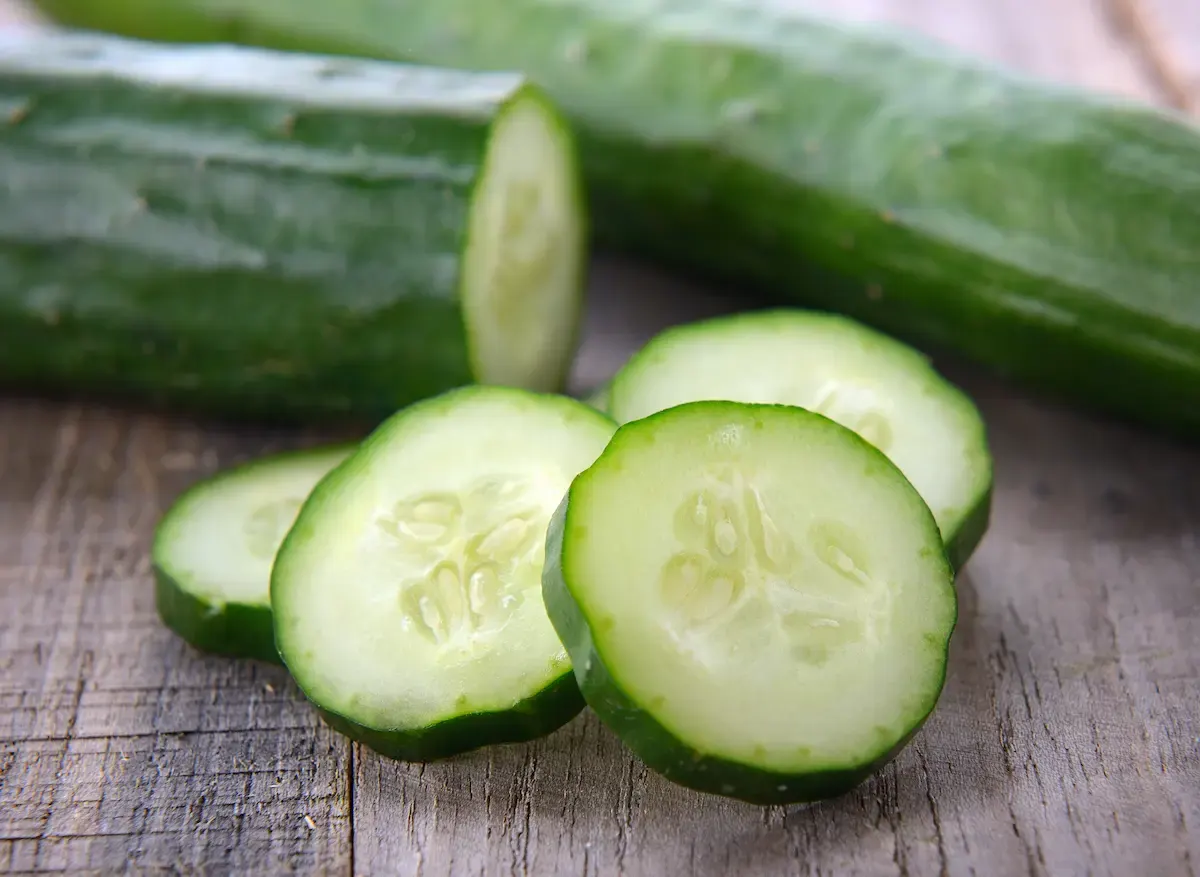
Cucumbers are familiar during the summer doyo and are easy to hold while stroking the body. The surviving documents do not let us trace the present form of the rite to a single origin or determine exactly when it arose. At Byodoji, each cucumber is handled with care as the yorishiro entrusted with one person's prayer.
A tangible yorishiro held in the hand
Each cucumber receives one petitioner's talisman and is ritually empowered before the Buddha.
At the temple, the petitioner strokes areas of physical concern with the cucumber. After the rite, Byodoji carefully places it in the earth within the temple grounds.

The summer doyo and seasonal cucumbers
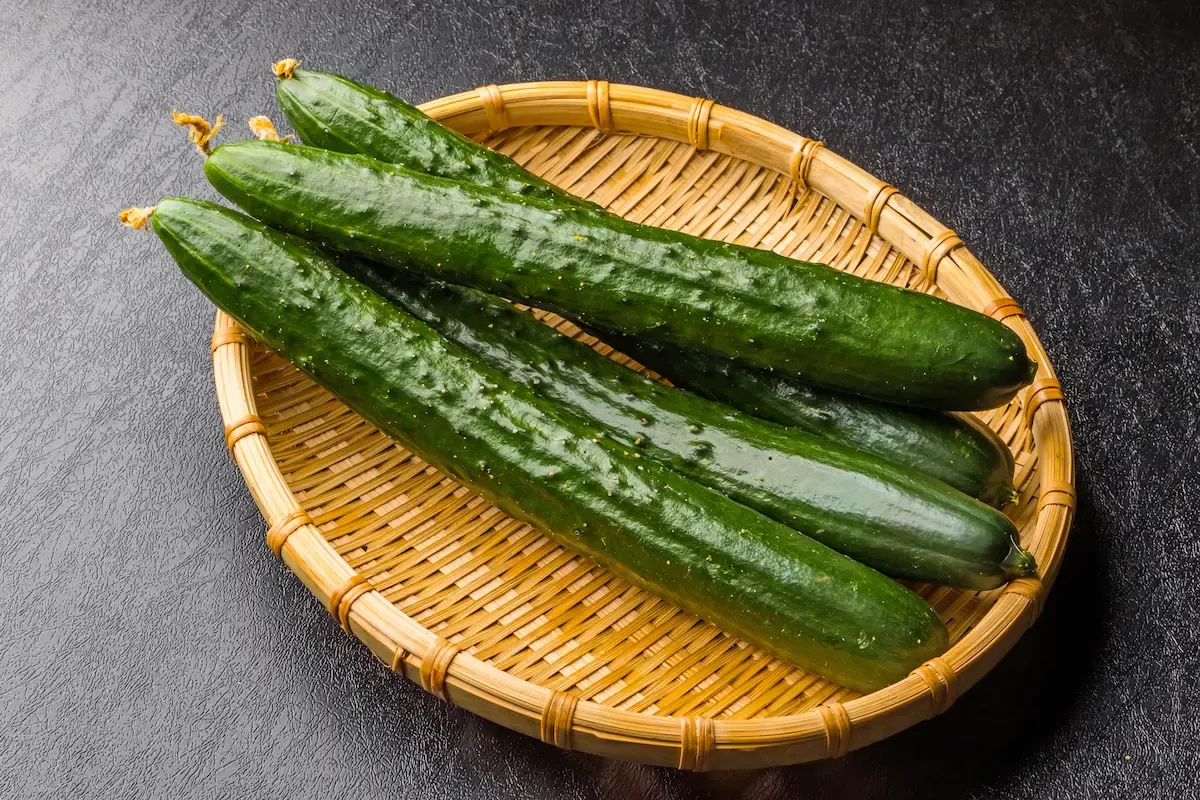
The summer doyo falls amid both hot weather and a change of season. Cucumbers are a familiar summer crop and are used in prayers at this time of year.
Temples preserve different traditions about why cucumbers are used. At Byodoji, each is treated with care as a yorishiro entrusted with a prayer.

What is "kaji"?
Empowerment (kaji) is the meeting of the Tathāgata's great compassion and our faith. It translates the Sanskrit adhiṣṭhāna. "Ka" expresses the Buddha's great compassion reflected in our minds; "ji" expresses our minds perceiving that activity.
Odaishi-sama wrote the following in his treatise, the Sokushin-jōbutsu-gi (Treatise on Becoming a Buddha in This Very Body).
Original Chinese Sokushin-jōbutsu-gi, the gloss on empowerment (Taishō Tripiṭaka vol. 77, No. 2428, composed by Kōbō Daishi)
加持者表如來大悲與衆生信心。佛日之影現衆生心水曰加。行者心水能感佛日名持。
English translation
Empowerment expresses the great compassion of the Tathāgata and the faith of sentient beings. That the reflection of the sun of the Buddha (the sun that is the Buddha) appears upon the water of the mind (shinsui, the surface of the mind) of sentient beings is called "ka." That the water of the mind of the practitioner is able (yoku) to perceive the sun of the Buddha is named "ji."
The light of the sun that is the Buddha is reflected upon the water of our minds, and we perceive that light. This working in both directions is called "kaji" (empowerment). In Kyuri Kaji, the cucumber is empowered as a yorishiro that stands in for the petitioner.
Kaji prayer is cultivated through the three mysteries of body, speech, and mind. In the Sokushin-jōbutsu-gi, Odaishi-sama describes the Buddha's three mysteries and ours entering mutual accord and empowering one another.
First, the table shows the three mysteries and their ritual actions. With that relationship in view, the third line of the eight-line verse, "The three mysteries empower one another, and it swiftly becomes manifest," is easier to follow.
| Three mysteries | Working | Action |
|---|---|---|
| Body mystery (shinmitsu) | The working of the body | Forming the mudrā (in) |
| Speech mystery (kumitsu) | The working of speech | Reciting the mantra |
| Mind mystery (imitsu) | The working of the mind | Visualizing the principal deity |
Original Chinese Sokushin-jōbutsu-gi, Verses on Becoming a Buddha in This Very Body, two verses and eight lines (Taishō Tripiṭaka vol. 77, No. 2428, composed by Kōbō Daishi, first half of the 9th century)
六大無礙常瑜伽 四種曼荼各不離
三密加持速疾顯 重重帝網名即身
法然具足薩般若 心數心王過剎塵
各具五智無際智 圓鏡力故實覺智
English translation
The six great elements do not obstruct one another and remain in mutual accord.
The four kinds of maṇḍala are never separate from one another.
When the Buddha's three mysteries and ours empower one another, the working of buddhahood in this very body swiftly becomes manifest.
Their interreflection, layer upon layer like Indra's jeweled net, is called "this very body."
The dharma body of the Buddha and the nature of sentient beings are originally endowed with all-knowing wisdom.
The mind and its many functions are more numerous than motes of dust.
Each is endowed with the five wisdoms and boundless wisdom,
and through the power of the perfect mirror becomes wisdom that truly awakens.
The third line teaches that when the Buddha's three mysteries and ours enter mutual accord and empower one another, the working of buddhahood in this very body swiftly becomes manifest. Here, "swiftly" does not promise how quickly an illness will improve or guarantee the result of a prayer.
When the three activities of body, speech, and mind correspond with the Buddha's three mysteries, the Buddha's activity is said to become manifest in this very body. In Kyuri Kaji, the officiating monk empowers a single concrete vessel—the cucumber—through the three mysteries of body, speech, and mind.
Why use a tangible object in prayer?
The Dainichikyō-sho (Commentary on the Mahāvairocana Sūtra) compares the Tathāgata's three mysteries and the practitioner's three mysteries to "a mirror and the image within it."
Original Chinese Dainichikyō-sho, fascicle five (Taishō Tripiṭaka vol. 39, No. 1796, expounded by Śubhakarasiṃha and recorded by Yixing, Tang dynasty, first half of the 8th century)
今此真言門中,以如來三密淨身為鏡,自身三密行為鏡中像,因縁有悉地生,猶如面像。
English translation
Now, within this gate of mantra, the pure body of the three mysteries of the Tathāgata is made the mirror, and the practice of one's own three mysteries is made the image within the mirror. That accomplishment (shitchi, siddhi) arises through causes and conditions is just like the relationship between a face and its mirror image.
This metaphor of "the mirror and the image within it" expresses how the practitioner's three mysteries correspond with the Tathāgata's three mysteries through causes and conditions, leading toward attainment. In Kyuri Kaji, too, the officiating monk empowers the cucumber as a tangible vessel through the three mysteries.
Odaishi-sama expounded it thus in the Sokushin-jōbutsu-gi.
The six great elements are without obstruction (rokudai muge) and ever in yoga (yuga).
The six great elements—earth, water, fire, wind, space, and consciousness—are expounded as the root that constitutes all things in the universe. The Sokushin-jōbutsu-gi shows that the bodies formed by the six great elements relate to one another without obstruction and are ever in mutual accord, in the phrase "the six great elements are without obstruction and ever in yoga."
In Kyuri Kaji, a single cucumber is empowered as a vessel. The teachings of the three mysteries and the six great elements cited here form part of the background to empowerment rites generally; they are not sources that directly prescribe the use of a cucumber as a vessel.
Tradition from Kōbō Daishi and records of gourds and kaji
Temples throughout Japan preserve Kyuri Kaji as a prayer transmitted by Kōbō Daishi. The materials below do not form a single, continuous chronology for that tradition. They are presented as distinct kinds of background evidence: Tang-dynasty esoteric ritual texts using gourds, Kōbō Daishi's teaching on kaji, and a medieval Japanese tale of kaji performed over gourds.
Rites using winter melon fruit and vines in homa
Esoteric Buddhist ritual texts translated in Chang'an, the Tang capital, record rites in which winter melon fruit and vines are offered to the sacred fire of wisdom in a homa. These passages show gourds being used as offerings and homa materials in esoteric Buddhist ritual.
The Dhāraṇīsamuccaya (Daranijikkyō), translated in 654 CE by Atikūṭa (Ajikuta), describes rites in which various offerings are presented to the sacred fire of wisdom in a homa to delight spirits and devas. One passage directs the practitioner to offer winter melon into the fire bit by bit.
Original Chinese Dhāraṇīsamuccaya, fascicle ten (Taishō Tripiṭaka vol. 18, No. 901, trans. Atikūṭa, Tang dynasty, 654 CE)
又法,取具嚧陀木一千八段,一各呪已,呪一遍火中燒盡,一切鳩盤荼、藥叉等鬼神皆悉歡喜。
又法,若火燒冬瓜少少,一千八遍并呪者,一切魍魎皆悉歡喜。
又法,若取塚墓之樹木一千八段與胡麻相和,火燒一千八遍并呪者,一切大惡鬼神歡喜。
English translation
Another rite. Take one thousand and eight pieces of guruda wood, which the source note describes as resembling a bodhi tree. Recite the incantation over each piece and burn it completely in the fire, one recitation at a time. Then spirits such as the kumbhāṇḍa and yakṣa will all rejoice.
Another rite. Offer winter melon into the fire bit by bit, performing it together with the incantation one thousand and eight times, and the mōryō spirits will all rejoice.
Another rite. Take one thousand and eight pieces of wood from a burial ground, combine them with sesame, and offer them into the fire together with the incantation one thousand and eight times. Then all the great evil spirits will rejoice.
The passage says that when winter melon is offered to the sacred fire of wisdom in a homa and the incantation is repeated one thousand and eight times, the mōryō spirits rejoice. Winter melon is one of the offerings used in this rite.
The Shō-kani-funnu-kongō-dōji-bosatsu-jōju-giki-kyō (the Ritual Manual for the Accomplishment of the Bodhisattva Krodha-Vajrakumāra), translated by Amoghavajra (Fukū Sanzō, 705–774), teaches a rite for subduing kumbhāṇḍa spirits that uses winter melon vines in a homa.
Original Chinese Shō-kani-funnu-kongō-dōji-bosatsu-jōju-giki-kyō, middle fascicle (Taishō Tripiṭaka vol. 21, No. 1222a, trans. Amoghavajra, Tang dynasty)
又法欲降伏鳩盤茶鬼,取冬瓜蔓藤長十指截一千八莖,搵酥護摩,誦真言一千八遍,一遍一擲火中,其鬼即皆降伏。
English translation
Another rite, to subdue the kumbhāṇḍa spirits (kubandaki). Cut winter melon vines to about the length of ten fingers and prepare one thousand and eight stems. Soak them in clarified butter (su, a dairy fat such as the ghee used in homa), perform the homa, and recite the mantra one thousand and eight times. With each recitation, cast one stem into the sacred fire of wisdom; then all those spirits will be subdued.
Here, what is cast into the sacred fire of wisdom is not the winter melon fruit but its vines. The earlier text uses the fruit; this one uses the vines. The point that can be compared with later Kyuri Kaji is the use of gourds as offerings or homa materials in esoteric Buddhist rites.
On the kumbhāṇḍa, Huilin's Yiqiejing yinyi includes the gloss "winter-melon spirit" and explains that its face, or in another account its belly, resembles a winter melon. Winter melon thus also appears in glosses on the spirit's name.
In Kyuri Kaji, participants entrust illness or misfortune to a cucumber, which is eventually placed in the earth. The winter-melon homa rites in Tang texts differ in period, purpose, and procedure and do not provide evidence of a direct line to the rite practiced today. What they confirm is an early record of gourds being used in esoteric Buddhist ritual.
Source: Taishō Tripiṭaka vol. 18, No. 901, Dhāraṇīsamuccaya, fascicle ten, 0873c01–c08 (trans. Atikūṭa); the same, vol. 21, No. 1222a, Shō-kani-funnu-kongō-dōji-bosatsu-jōju-giki-kyō, middle fascicle, 0112c26–c28 (trans. Amoghavajra); and the kumbhāṇḍa-related entries in vol. 54, No. 2128, Yiqiejing yinyi. The text is held by the Chinese Buddhist Electronic Text Association (CBETA).
Odaishi-sama brings esoteric Buddhism to Japan
Odaishi-sama (774–835) traveled to Tang China from 804 to 806 CE, received the abhiṣeka (kanjō) of both maṇḍala divisions from Master Huiguo (Keika Ajari) of Qinglong Temple in Chang'an, and brought the orthodox lineage of esoteric Buddhism to Japan. He later explained kaji and the three mysteries empowerment in works such as the Sokushin-jōbutsu-gi (for details, see What is "kaji"?). His Catalogue of Newly Imported Sūtras also lists, in three fascicles, the same ritual text cited above for a homa method using winter-melon vines.
The catalogue establishes a documentary connection between Odaishi-sama and this ritual text. It does not prove that today's Kyuri Kaji arose directly from that method or that the practice continued without interruption. Sources: Taishō Tripiṭaka vol. 55, No. 2161, Catalogue of Newly Imported Sūtras; vol. 77, No. 2428, Sokushin-jōbutsu-gi; and vol. 39, No. 1796, Dainichikyō-sho, fascicle five.
Empowerment over a gourd, before Fujiwara no Michinaga
In the Genkō Shakusho, a history of Japanese Buddhism composed by Kokan Shiren (1278–1346) of the late Kamakura period, fascicle four, "Wisdom and Understanding, Part Two of Three," the Biography of the Monk Kanju (Shaku Kanju den), there is preserved an intriguing anecdote. It is the tale of an occasion when summer gourds were delivered to Fujiwara no Michinaga (966–1028), and there happened to be present Kanju (945–1008, Tendai school, chief administrator of Onjōji), who was deeply revered by Michinaga, the onmyōji and doctor of astronomy Abe no Seimei (921–1005), and the physician Tanba no Shigemasa (946–1011).
Original Chinese Genkō Shakusho, fascicle four (composed by Kokan Shiren, completed in 1322, 30 fascicles in all. Held in CBETA Supplement No. B0173)
術家白藤府言。某日家內有恠。
至期相國閉門謝客。晡時有叩者。問之對曰。和州之瓜使也。
開門納之。于時修在座。大史安晴明。大毉重雅預焉。
相國顧安大史曰。家裏有齋祓。不知此瓜可嘗不。
晴明曰。瓜中有毒不可輙啖也。
相國語修曰。許多瓜子何為毒乎。
修誦呪加持。忽一瓜宛轉騰躍。一座驚恠。
重雅乃袖出一針針瓜。其動便止。割見中有毒蛇針中其眼。
蓋術家之言是也。都下嘆三子之精其術矣。
English translation
A diviner told Fujiwara no Michinaga's household that a strange event would occur there on a certain day. When the day came, Michinaga closed his gate and received no visitors. In the evening someone knocked. Asked who he was, the visitor replied that he had come from Yamato Province to deliver gourds.
The gate was opened and the gourds were brought in. Kanju was present, together with the Grand Astrologer Abe no Seimei and the Grand Physician Tanba no Shigemasa.
Michinaga turned to Seimei and asked, "A purification rite has just been performed in the household. May these gourds be eaten?" Seimei replied, "There is poison in the gourds. They should not be eaten carelessly."
Michinaga asked Kanju, "Among so many gourds, which one could be poisonous?"
Kanju recited an incantation and performed kaji. One gourd suddenly rolled and sprang up, astonishing everyone present.
Shigemasa drew a needle from his sleeve and pierced the gourd. Its movement stopped. When it was cut open, a poisonous snake was found inside, the needle piercing its eye. The diviner's warning had proved correct, and people in the capital praised the three men for their mastery of their respective arts.
In this tale, a gourd begins to move when the monk recites an incantation and performs kaji, and the physician's needle reveals the poisonous snake inside. It is cited here as an early Japanese example in which gourds and kaji are narrated together.
Source: Kokan Shiren, Genkō Shakusho, fascicle four, "Wisdom and Understanding, Part Two of Three," the Biography of the Monk Kanju. A similar tale is also preserved in the Kokon Chomonjū, fascicle seven, "The Arts, No. 9," Tale 295.
Toward the rite practiced today
The Tang-dynasty winter-melon homa rites and the Japanese tale of kaji performed over gourds show background instances in which gourds and esoteric Buddhist ritual are linked. These materials alone, however, do not allow us to trace an unbroken path to Kyuri Kaji as practiced today.
When and how did the practice of using a cucumber as a stand-in, entrusting illness or misfortune to it, empowering it before the Buddha, and placing it in the earth spread from place to place? Parts of that process remain unknown.
Today, temples throughout Japan perform Kyuri Kaji, and some accept applications online. For Byodoji's service and application details, see Kyuri Kaji at Byodoji. For a list of other temples, see Temples performing Kyuri Kaji across Japan.
Records of Kyuri Kaji in Hawaii
There are records of Kyuri Kaji crossing the Pacific to Japanese communities in Hawaii.
From 1885 onward, many Japanese migrated to Hawaii and carried Buddhist observances and religious gatherings from home into their new surroundings. Records of Kyuri Kaji form part of that history.
In "Aspects of Japanese American Buddhist Organizations in Prewar Hawaii," Tomoe Moriya describes Daishikō gatherings devoted to Kōbō Daishi as lay religious organizations and notes that their lay leaders mainly carried out rites praying for recovery from illness. This account concerns prewar Daishikō; it does not demonstrate any medical efficacy of present-day Kyuri Kaji.


Two documented observances in 2022
Records confirm that Kyuri Kaji was held at two Shingon temples in Hawaii in 2022.
At Waimea Shingon Mission on Kauaʻi, a "kyuri kaji, or cucumber blessing" was held in July 2022. At Honomu Henjoji on Hawaiʻi Island, "Kyuri Kaji Blessing" was listed for its monthly Daishikō service on July 17 that year. These are records of observances in 2022, not announcements for 2026.
References: The Garden Island (July 15, 2022) and Honomu Henjoji's July 2022 event record.
Frequently asked questions (on doctrine)
Because the summer doyo, when the heat easily upsets one's health, is a time to pray for freedom from illness by returning misfortune to the earth.
Temples across Japan preserve it as a prayer transmitted by Kōbō Daishi. Byodoji respects that temple tradition and performs it as an empowerment rite grounded in the teaching of the three mysteries. This article distinguishes the origin story preserved by temples from documentary records that can be checked concerning gourds and empowerment.
Principal references and sources
This page is compiled on the basis of a comprehensive search of primary-source materials. Here we introduce the principal works that serve as sources for its descriptions.
On this page, in order to convey the Kyuri Kaji handed down by Kōbō Daishi, we refer to the above original texts and research materials as background sources. The relationship between literary documents, temple traditions, and folkloric materials is set out as distinctly as possible within the main text.
Primary scriptures and original texts
Materia medica, dictionaries, and almanacs
Studies in folklore and religious studies
Online databases of primary sources
Summer Doyo, 2026
Kyuri Kaji at Byodoji
Entrust a name and prayer to one cucumber as we pray before Yakushi Nyorai for health and safety.
- Duration
- About 2 hours
- Participation
- At the temple or online
- Applications open each year before the Doyō-no-Ushi day. The next schedule will be announced in the service guide.
- Byodoji prepares the cucumber for online participants.
- Please continue medical diagnosis, treatment, medication, and everyday health care.
Applications for 2026 are now closed. Prayers for good health are also accepted at the monthly goma services.