
Kṣitigarbha at Byodoji
Byodoji and Kṣitigarbha
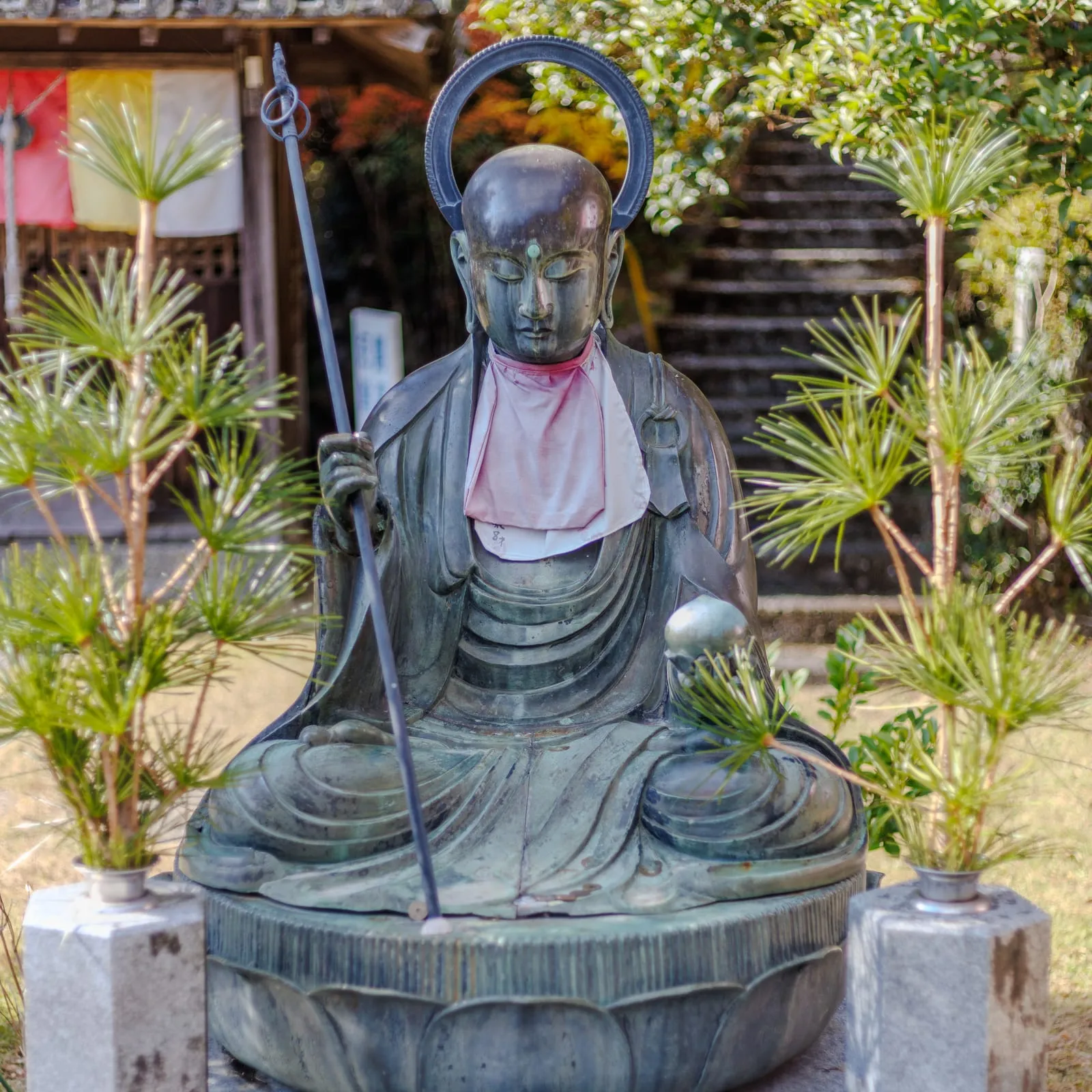
The Jizō of Byodoji is a bronze seated statue made around 1750 with donations from the people of Tsuyama in Okayama. He holds a monk's staff (shakujō) in his right hand and a wish-fulfilling jewel (hōju) in his left, and sits on a lotus pedestal.
The temple grounds also enshrine the Horidashi Jizō, "the unearthed Jizō," said to have been dug up by Kōbō Daishi (Kūkai). It is held to be a stone statue about 1,200 years old and stands beside the well where the sacred water of Kōbō springs.
At Byodoji, we offer Jizō prayers for children and the departed: for a child's healthy growth, for children lost before birth (mizuko kuyō), and for ancestors.
About the Statue
Who Is Kṣitigarbha?
Jizō is the bodhisattva who vowed to save all beings lost in the six realms (rokudō), the six worlds of delusion from the hells to the heavens, in an age when no Buddha is in the world.
Jizō wears no jeweled crown and is shown as a monk with a shaved head. In the form of a renunciant, the kind of monk closest to ordinary people, he walks through the six realms and stands beside those who suffer. He has long been cherished in the form that holds a monk's staff in the right hand and a wish-fulfilling jewel in the left.
The Sutra of the Original Vow of Kṣitigarbha teaches Jizō's original vow: he will become a Buddha himself only at the very last, after saving every suffering being. In Japan he has been widely revered as the one who guides the departed and protects young children.
The Jizō Goma on the 24th of Every Month
The 24th is Jizō's ennichi, his day of special connection. On the night of the 24th of each month, Byodoji performs the Jizō goma before Jizō.
In the goma, the wisdom-fire (chika), which represents the Buddha's wisdom, is kindled, and wishes such as a child's healthy growth, mizuko kuyō, and memorials for ancestors are entrusted to it. The date and time, the offering amount, and how to apply are on the goma page.
The Mantra We Recite
When we join our palms before Jizō, we recite the following mantra.
The mantra of Kṣitigarbha
on kakaka bisanmaei sowaka
oṃ ha ha ha vismaye svāhā
A mantra that praises Jizō's great compassion and prays for his saving grace.
Frequently Asked Questions
What wishes may I entrust to the Jizō goma?
You may entrust wishes for children and the departed, such as a child's healthy growth, mizuko kuyō, and memorials for ancestors. You may also write the names of the departed or of your children.
How can I take part in the goma on the 24th of each month?
The date and time, the prayers offered, and the offering amount are explained on the Jizō goma page. You can also apply online and join through the live stream from the same page.
Choose a Goma by your wish
Byodoji accepts online applications for five monthly Goma rites. Choose the deity closest to your wish, then review the details on the application screen.
References and sources
Fuller references on the scriptures, form, and history of devotion to Jizō Bodhisattva are listed in the article "What Is Kṣitigarbha (Jizō)?"
See the full references in "What Is Kṣitigarbha (Jizō)?"Objects and temple tradition at Byodoji
Scriptures and Shingon ritual texts
Research and introductory works
Read Together
An explanation of Jizō Bodhisattva, and a guide to the Jizō goma.
What Is Kṣitigarbha (Jizō)?
An article explaining Jizō's original vow, the meaning of his name, his form as a monk, and his blessings, in the words of the sutras.
ReadThe Jizō Goma on the 24th of Every Month
An explanation of the goma for a child's healthy growth and for memorials of mizuko and ancestors, with guidance on applying online.
ReadThe Eleven-Faced Kannon of the Jibutsudo
An introduction to the Eleven-Faced Kannon, the principal image of the jibutsudō, and the goma on the 18th of each month.
Read