
Acala at Byodoji
Byodoji and Acala
The Fudō of Byodoji is a seated statue in the yosegi-zukuri (joined-wood) technique, said to date from the Edo period. Holding a sharp sword in his right hand and a lasso in his left, he shows a wrathful form with bared fangs and tenchigan, "heaven-and-earth eyes," in which one eye looks up and the other looks down.
The Shō Hassenmai-ku is a great rite with Fudō as its principal deity. On the day the rite is completed, 8,000 goma sticks are offered into the flames.
On the 28th of each month, the Fudō goma is performed, and the wisdom-fire is kindled with prayers for protection from misfortune and disaster and for a peaceful, long life.
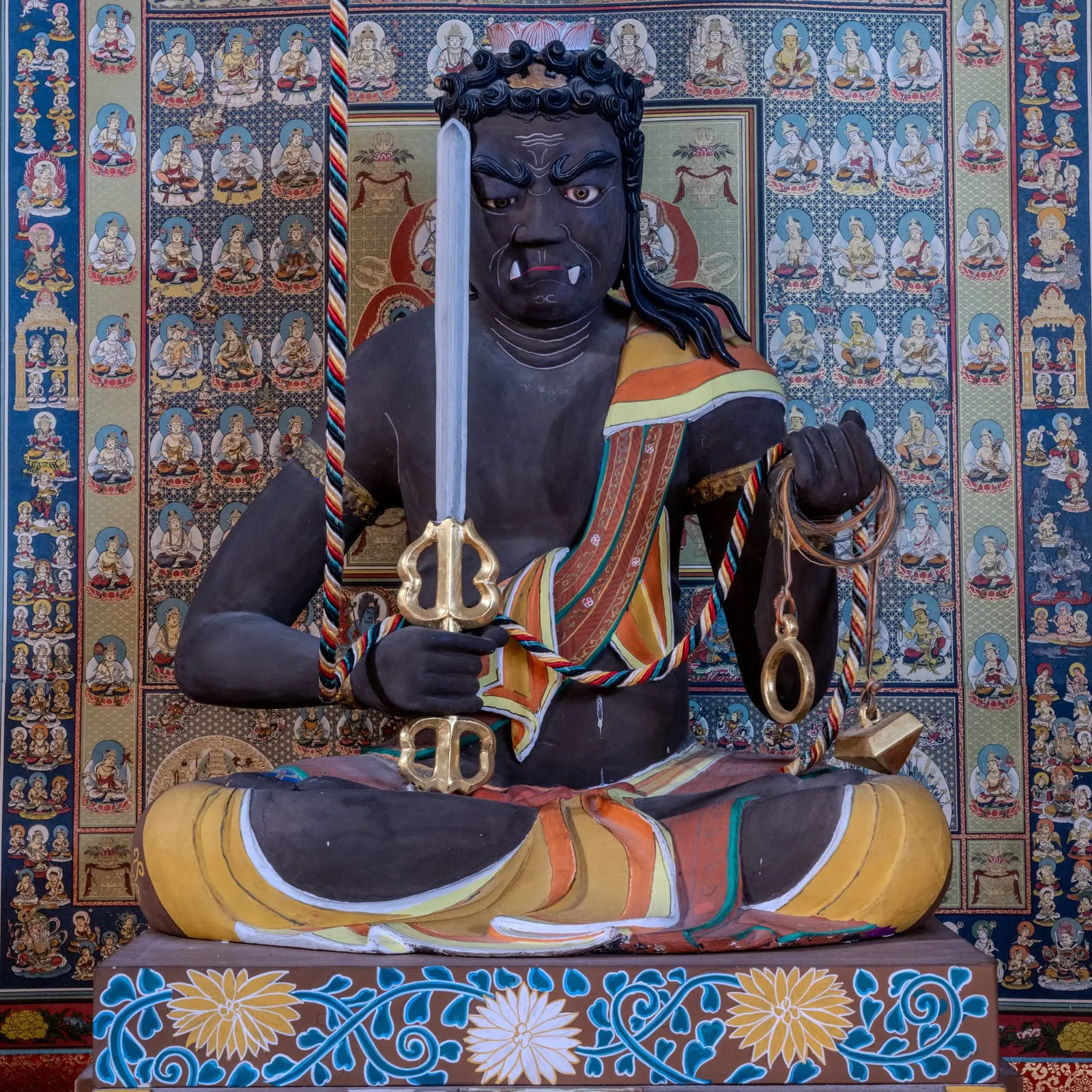
About the Statue
What Is Fudō Myōō
Fudō Myōō is Dainichi Nyorai (Mahāvairocana) appearing in a wrathful form.
He is known for his form: flames blazing at his back, a sword in his right hand and a lasso in his left, seated unshaken upon a great rock. His stern, wrathful expression is the great compassion that seeks to save people.
The flames at his back represent the wisdom-fire, which is said to burn away both calamities from without and afflictions within. With the sword Fudō cuts through delusion, and with the lasso he draws in those who have lost their way and leads them to awakening. He is the deity to whom people pray for protection from misfortune and for safety.
The Fudō Goma on the 28th of Each Month
The 28th is Fudō's ennichi, his day of special connection. On the night of the 28th of each month, Byodoji performs the Fudō goma before him.
In the goma, the wisdom-fire (chika), which represents the Buddha's wisdom, is kindled, with prayers for protection from misfortune and disaster and for a peaceful, long life. The date and time, the prayers offered, the offering amount, and how to apply are on the goma page.
The Mantra to Recite
When we join our palms before Fudō, we recite the following mantra (the Jiku-shu).
The mantra of Fudō Myōō (the Jiku-shu)
nōmaku sanmanda bazaradan senda makaroshada sowataya un tarata kanman
namaḥ samanta-vajrāṇāṃ caṇḍa-mahāroṣaṇa sphoṭaya hūṃ traṭ hāṃ māṃ
Fudō's medium-length mantra (the Jiku-shu), a prayer meaning "I take refuge in the all-pervading Vajra Ones. O fierce and greatly wrathful one, shatter the hindrances."
Frequently Asked Questions
What wishes may I entrust to the Fudō goma?
You may entrust wishes to cut off misfortune and protect yourself, such as protection from misfortune and disaster, a peaceful and long life, good health, and turning misfortune into good fortune. The goma is also performed to ward off the misfortunes of yakudoshi, the unlucky years.
What is the Shō Hassenmai-ku?
It is a great rite with Fudō as its principal deity. On the day the rite is completed, 8,000 goma sticks are offered into the flames, afflictions and calamities are burned away in the wisdom-fire, and prayers are offered for wishes to be fulfilled. The Shō Nijūnimanmai Goma-ku (220,000 goma sticks) performed in 2022 was a service with Yakushi Nyorai as its principal deity.
How can I take part in the goma on the 28th of each month?
The date and time, the prayers offered, and the offering amount are explained on the Fudō goma page. You can also apply online and join through the live stream from the same page.
Choose a Goma by your wish
Byodoji accepts online applications for five monthly Goma rites. Choose the deity closest to your wish, then review the details on the application screen.
References and sources
This page lists sources directly related to Byodoji's image and devotion to Fudō. Fuller references on the scriptures, form, and history of devotion to Fudō Myōō are listed in the article "What Is Acala (Fudō Myōō)."
See the full references in "What Is Acala (Fudō Myōō)"Objects and practices at Byodoji
Scriptures and ritual manuals
Research and introductory works
Read Together
An explanation of Fudō Myōō, and a guide to the goma.
What Is Acala (Fudō Myōō)
An article explaining the vow, form, and blessings of Fudō, a manifestation of Dainichi Nyorai, in the words of the sutras and ritual manuals.
ReadThe Fudō Goma on the 28th of Each Month
An explanation of the goma for protection from misfortune and for safety, with guidance on applying online.
ReadThe Eleven-Faced Kannon of the Jibutsudo
An introduction to the Eleven-Faced Kannon, the principal image of the jibutsudō, and the goma on the 18th of each month.
Read