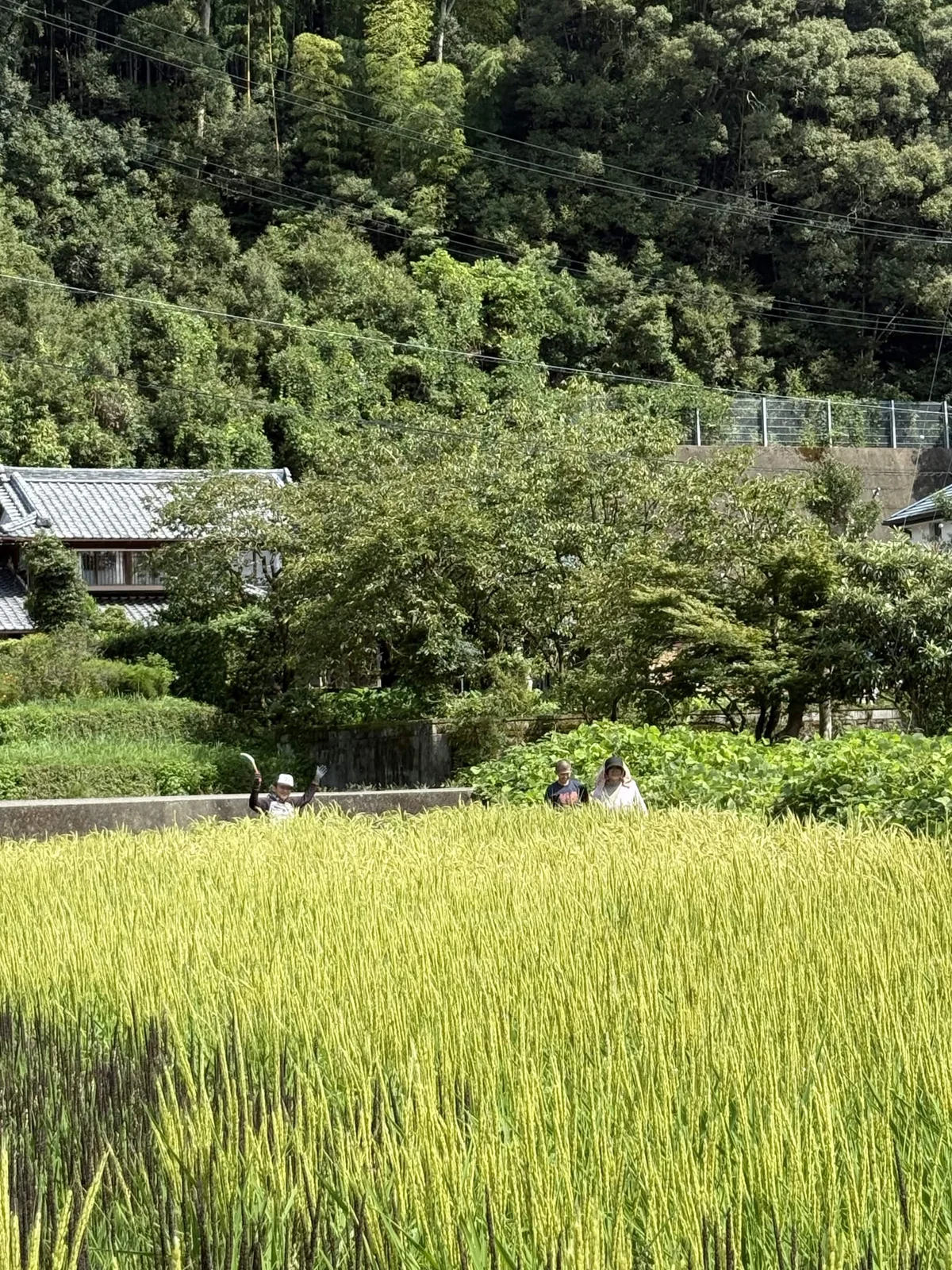
Rice-field updates are being prepared
At each milestone, such as planting, green-rice cutting, and harvest, the administrator will post a photo and short report. Once published, the newest field update will appear here.
Making authentic shimenawa,starting with rice planting
Rice grown at Byodoji is prepared as straw, purified with sacred spring water, and woven with care into shimenawa.
In 2026, Byodoji is growing tall sake rice and ornamental black rice, and this page will report the path from planting to the goma prayer. Application details will also be posted here once year-end distribution is ready.
This year focuses on both the quality of the straw that forms the rope and the richer expression of the decorations.
Tall sake rice is being raised from sprouting so the straw can become long, supple material suited for shimenawa.
Black rice for decoration is also being grown to add quiet depth and shadow to the shimekazari.
The page will be updated at each milestone, from rice planting and green-rice cutting to harvest and prayer.
The finished rope is only one part of the story. The changing field and the accumulation of handwork are also part of the 2026 record.
Seedlings for shimenawa straw are planted one by one in the field in front of the temple.
The temple checks the blue-green straw suited for shimenawa at a summer turning point.
The rice is harvested by hand, and straw for the rope and decorations is selected with care.
The completed shimenawa are blessed in the goma prayer before being sent out.
Photos and short notes posted by the administrator show the latest state of the rice and straw-making work.

At each milestone, such as planting, green-rice cutting, and harvest, the administrator will post a photo and short report. Once published, the newest field update will appear here.
The Shimenawa From the Field Project grows rice in a field in front of Byodoji and uses the straw to make shimenawa and amulets.
Today many shimenawa are ready-made or imported. Byodoji wanted to offer a truly rooted shimenawa, so every stage is carried out at the temple: planting, harvest, straw preparation, rope-making, and prayer.
The straw is purified with water from the Hakusui well, said to have been found by Kobo Daishi Kukai, and blessed through goma prayer at Byodoji, the 22nd temple of the Shikoku pilgrimage.
Soil, water, and seedlings shape the year's shimenawa
Rice planting and green-rice cutting decide the straw's length, suppleness, and color. In 2026, Byodoji is watching tall sake rice and black rice closely while raising the right straw for shimenawa.
On May 16, 2026, rice planting will take place in the field in front of Byodoji. Parishioners, supporters, and local participants plant each seedling carefully.
This is not only farm work. It is a sacred event of gratitude to the rice deity and prayer for a good harvest, with participants feeling the mud, soil, and water directly.

On July 19, 2026, the green-rice cutting marks a summer milestone. The temple checks the growth of tall sake rice and the color of black rice to see how the straw is developing for shimenawa.
Water management, weeding, and daily care continue with parishioners until the autumn harvest, deepening gratitude for the Buddha's support and nature's gifts.


In autumn, the golden rice will be harvested by hand on September 12, 2026 with parishioners and visitors. Each bundle is cut without machines, carrying gratitude for the rice.
The harvested rice is tied into bundles and sun-dried inside the temple grounds. This traditional drying method slowly uses sunlight and wind, bringing out the fragrance and texture of the straw.
Machine harvesting can damage straw and make it unsuitable for shimenawa. Cutting from the base by hand helps preserve long, supple, high-quality straw.

From dried rice bundles, the straw suitable for shimenawa is selected one piece at a time. Only straight, undamaged straw with good color is kept.
The leaf sheath is removed so only the core straw remains. This patient handwork is essential because it shapes the beauty of the finished shimenawa.

The selected straw is purified with water from the Hakusui well, said to have been found by Kobo Daishi Kukai. Pilgrims have long cherished this water.

After purification, the straw is dried again in the sun. Through this stage, the straw becomes more than a plant material; it becomes material for sacred shimenawa.
This well gives Byodoji its mountain name, Hakusuizan. Legend says that when Kobo Daishi struck the ground with his staff, white water sprang forth. The clear water still flows after more than 1,200 years.

Using straw purified with sacred water, the rope is finally woven. Everything is done by hand with skilled instructors and parishioners.

The straw is twisted into three-ply rope and shaped into designs such as Rinnen, 8, and 88. Auspicious crane-and-turtle mizuhiki ornaments are also attached by hand.

After about seven months from rice planting, the shimenawa is complete. It is a fully handmade rope made without machines.

The completed shimenawa and amulets will be blessed in the shimenawa goma prayer on December 8, 2026. In the main hall of Byodoji, the 22nd temple of the Shikoku pilgrimage, the prayer asks for health and safety through the coming year.
The fire of goma is said to burn away defilements and carry prayers to the Buddhas. With that prayer, the shimenawa are sent to each household.
Goma is a major Shingon Buddhist rite. Fire is raised on the altar while mantras are recited and offerings are placed into the flames, burning away defilements and carrying prayers to the Buddhas.

Byodoji's executive director supervises every stage of the Shimenawa From the Field Project.

A skilled instructor in rice planting and shimenawa making, passing on the traditional techniques from planting and harvest to straw weaving.
Many online visitors, parishioners, and supporters take part from planting and harvest to the final shimenawa making.
These items are made with straw grown from the beginning and purified with sacred water.
These New Year decorations can be placed at an entrance or in a room. Three designs are prepared.

A round form inspired by a mandala where the Buddha's merit gathers.
From ¥3,800

A figure-eight shape suggesting infinity and widening good fortune.
From ¥5,800

An 88 form representing the Shikoku pilgrimage.
From ¥8,800
The 2026 sacred-water shimekazari will be prepared through this field-to-rope process. Distribution details will be posted here once ready.
An amulet for leg and back health, made with straw purified by sacred water and shaped like a small straw sandal.

Waraji straw sandals have long protected travelers' feet. This amulet is a miniature waraji woven from straw purified with sacred water.
The waraji amulet is mailed after being blessed in goma prayer.
A good-fortune amulet woven in the shape of 8 with straw purified by sacred water.

The number 8 is auspicious in Japan because it suggests widening fortune. Two eights, 88, also symbolize the Shikoku pilgrimage and are said to carry the merit of visiting all 88 temples.
It is also cherished as an amulet for leg and back health and traffic safety, honoring walking pilgrims and experienced drivers who have visited Shikoku many times.
One set contains two amulets in the shape of 8. You may keep both or share one with someone important to you.